
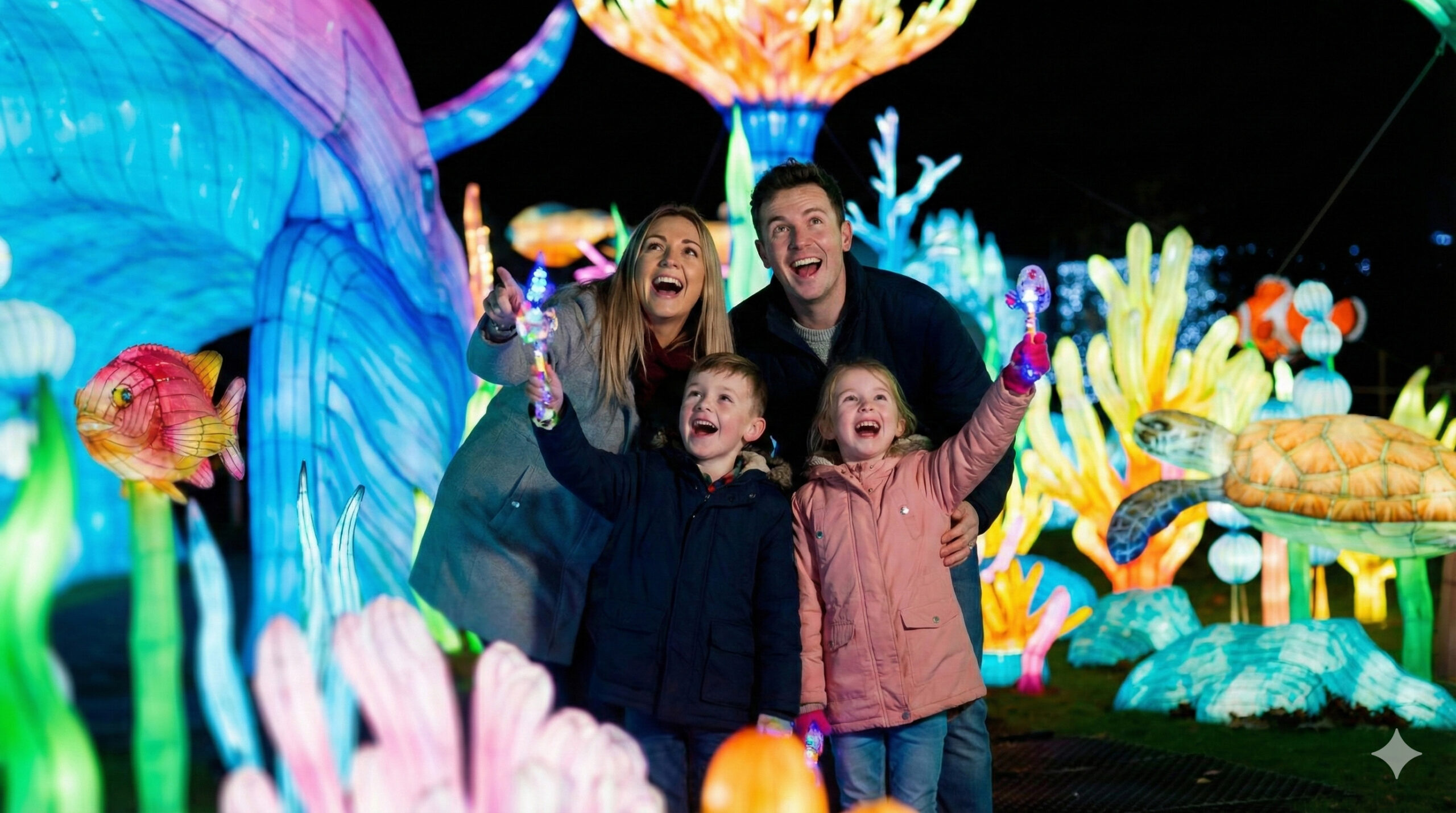
AI Summary
A Lantern Festival is a highly profitable commercial engine. Thoughtfully integrating secondary options easily boosts visitor revenue.
- Place themed food in mid-route zones.
- Use engaging shows to extend stay times.
- Implement tiered pricing and premium upgrades.
- Design a seamless journey to ease spending.
Lantern Festival
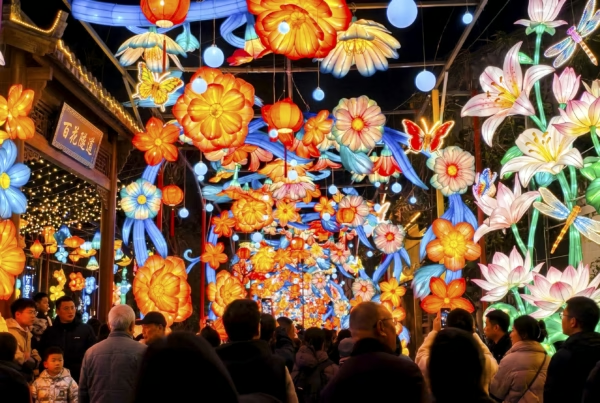
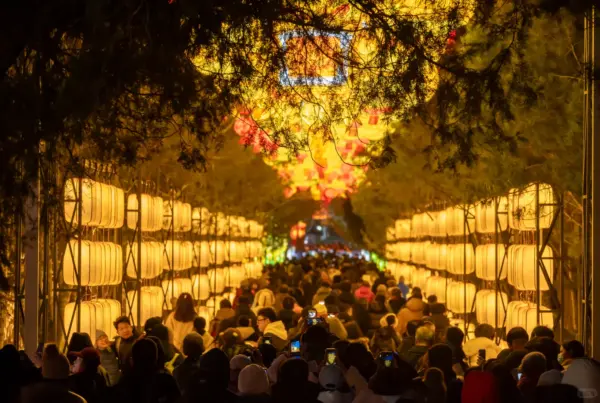
A Lantern Festival is no longer just a visual attraction. It has quietly evolved into a multi-layered commercial engine. At first glance, visitors come for the lights. However, once inside, their behavior shifts. They linger longer. They explore more. And importantly, they spend more.
This is where operators often miss the opportunity. A Lantern Festival without structured secondary spending is like a restaurant that only sells water. Beautiful, yes. Profitable, not fully.
From direct field experience across European venues, one pattern is consistent. When lighting, food, and performance are integrated into a single narrative journey, per-capita spending can increase by a meaningful margin. Not slightly—significantly.
The Lantern Festival Company™ has observed that visitors rarely resist spending when the environment encourages emotional engagement. The key is not pushing sales. Instead, it is designing moments where spending feels natural.
Interestingly, there is a contradiction at play. Visitors claim they want “simple experiences.” Yet, when given layered options—food tastings, live shows, photo zones—they engage more deeply. They stay longer. They spend more. That contradiction is not a flaw. It is an opportunity.
Consider the basic spending structure:
|
Revenue Layer |
Typical Spend Driver |
Impact Level |
|---|---|---|
|
Ticket |
Entry experience |
Fixed |
|
Food & Beverage |
Emotional + sensory |
High |
|
Shows |
Time extension |
Medium |
|
Merchandise |
Memory capture |
Medium |
|
Add-ons |
Premium experiences |
High |
So, what does this mean in practice? A Lantern Festival should be treated as a platform, not a product.
Furthermore, venues with strong storytelling consistently outperform those without. Why? Because storytelling connects every spending point into a seamless journey.
For example:
-
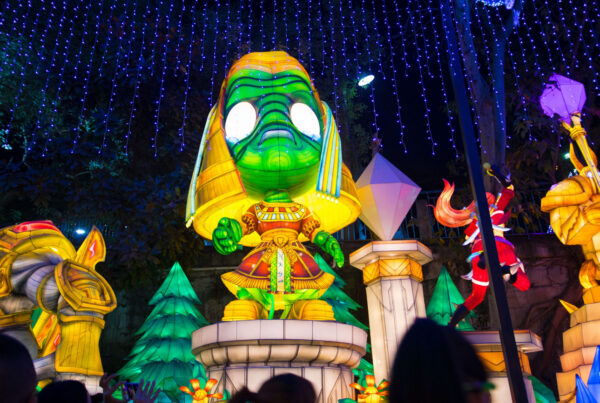
A dragon-themed lantern leads to a themed food stall
-
The stall connects to a cultural performance nearby
-
The performance directs visitors toward a premium seating upgrade
This is not accidental. It is intentional design.
Moreover, integrating multiple revenue streams reduces dependency on ticket sales. That matters, especially in unpredictable markets.
Before moving forward, one question should guide every operator:
Are you designing a walk-through exhibition—or a spending ecosystem?
Combining Food with Lantern Festival Experiences
Food as an Emotional Anchor in a Lantern Festival
Food is not just a revenue stream. It is an emotional trigger.
Visitors associate taste with memory. Therefore, food becomes one of the strongest drivers of additional spending during a Lantern Festival.
From operational data, food can account for a substantial portion of total revenue when executed correctly. However, not all food strategies work equally well.
Generic offerings tend to underperform. Themed offerings, on the other hand, convert.
For instance:
-
Asian street food aligns naturally with traditional lantern aesthetics
-
Local cuisine creates familiarity and comfort
-
Fusion concepts generate curiosity
The key is alignment. Food should feel like part of the story, not an afterthought.
Strategic Placement of Food Zones in a Lantern Festival
Placement is often underestimated.
Food stalls located at entry points may attract early purchases. However, mid-route placements tend to generate higher total spend. Why? Because visitors are more relaxed after initial exploration.
Effective placement strategy includes:
-
Midpoint rest zones
-
Scenic dining areas
-
Exit-adjacent impulse purchase spots
Additionally, lighting design around food areas plays a role. Warm lighting encourages longer stays, which increases spending probability.
Pricing Psychology Within a Lantern Festival Setting
Pricing does not operate in isolation.
Visitors entering a Lantern Festival are already in a spending mindset. However, price sensitivity still exists.
Balanced pricing strategies include:
-
Tiered menu options
-
Bundle deals (food + drink combos)
-
Limited-time offers tied to performances
Interestingly, slightly higher pricing can work if perceived value is clear. Presentation matters. Experience matters more.
Operational Efficiency and Throughput
High demand without efficiency leads to lost revenue.
Long queues discourage purchases. Therefore, operational flow must be optimized:
-
Pre-prepared menu items
-
Multiple payment methods
-
Clear signage
A Lantern Festival is often time-limited per visit. Every minute saved in queue equals more opportunities to spend elsewhere.
Enhancing Lantern Festival Value Through Shows and Performances
Why Shows Extend Stay Time in a Lantern Festival
Shows are not just entertainment. They are time anchors.
Without performances, visitors may complete a Lantern Festival in a short duration. With performances, visit duration increases.
Longer stay equals higher spending.
Typical performance formats include:
-
Cultural dance shows
-
Acrobatics
-
Light projection storytelling
-
Interactive performances
Each format serves a different purpose. Some attract crowds. Others distribute flow.
Scheduling Shows to Optimize Revenue Flow
Timing is critical.
Shows scheduled too early may miss peak attendance. Too late, and visitors may already leave.
An effective schedule:
-
Staggered performances
-
Repeat key shows
-
Align peak shows with peak visitor hours
Moreover, linking shows with nearby food zones increases cross-selling opportunities.
Premium Experiences Within a Lantern Festival
Premium upgrades can significantly increase per-capita spend.
Examples include:
-
Reserved seating areas
-
VIP viewing platforms
-
Exclusive performances
These offerings should feel special, not restricted.
Visitors are willing to pay more for comfort and exclusivity—especially during crowded periods.
Interactive Shows as Spending Catalysts
Interactive elements increase engagement.
When visitors participate, they become part of the experience. This emotional involvement often leads to higher spending.
Examples:
-
Audience participation performances
-
Photo opportunities with performers
-
Themed mini-events
In practice, interaction transforms passive visitors into active consumers.
Designing an Integrated Lantern Festival Revenue Ecosystem
Creating a Seamless Visitor Journey in a Lantern Festival
A successful Lantern Festival feels effortless.
Visitors should move naturally from one experience to another. Transitions must be smooth.
A typical journey may include:
-
Entrance wow moment
-
Exploration phase
-
Engagement zones (food + shows)
-
Relaxation areas
-
Exit with retail opportunities
Each stage should introduce a new spending opportunity without feeling forced.
Balancing Visual Impact and Commercial Intent
Too much commercialization can reduce experience quality.
However, too little leaves revenue untapped.
The balance lies in subtle integration.
For example:
-
Food stalls designed as lantern installations
-
Merchandise integrated into themed environments
-
Performances sponsored but not intrusive
Visitors should feel immersed, not marketed to.
Data-Driven Optimization in Lantern Festival Operations
Data improves outcomes.
Tracking visitor behavior allows operators to refine:
-
High-traffic zones
-
Peak spending times
-
Popular offerings
Simple tools can provide insights:
-
POS data
-
Heat mapping
-
Visitor surveys
Over time, patterns emerge. Adjustments become precise.
Partnership Models to Expand Revenue Potential
Collaboration can enhance offerings.
Partners may include:
-
Local food vendors
-
Cultural performers
-
Brand sponsors
Each partner adds value while sharing risk.
The Lantern Festival Company™ often emphasizes flexible partnership structures. These allow venues to scale offerings without excessive upfront investment.
Conclusion: Turning a Lantern Festival into a High-Value Experience
A Lantern Festival has evolved beyond its traditional roots. Today, it is a platform for immersive, multi-sensory engagement.
When food, shows, and lighting are combined effectively, the result is not just a beautiful event. It becomes a revenue-generating ecosystem.
However, success does not happen by chance.
It requires:
-
Intentional design
-
Strategic placement
-
Emotional engagement
-
Operational efficiency
At times, operators hesitate to add complexity. They fear overwhelming visitors. Yet, the opposite is often true. When executed well, layered experiences enhance clarity, not confusion.
Visitors do not resist spending. They resist poor experiences.
Therefore, the objective is simple:
Create moments worth paying for.
The Lantern Festival Company™ has repeatedly demonstrated that when experiences are designed holistically, per-capita spending increases naturally.
So, the final question remains:
Are you simply hosting a Lantern Festival—or are you building a complete economic experience around it?